

An artificial intelligence extracurricular activity for children It teaches children how AI works, how to create projects with it, and how to use it effectively. It's not about asking a chatbot to do their homework. Children can start around age 6 or 7 with games and robots, train their own models from age 8 or 9, and design AI solutions from age 12.
For many families, the question is no longer whether their children will use AI, but how. According to the exploratory study of Mayansi According to a study published in September 2026, 88,9% of children aged 10 to 13 had already used generative AI tools. However, only 33,6% regularly check the responses they receive, and 81,8% of those who use them want to learn more about how they work. This gap between use and understanding is precisely where a good STEM AI extracurricular activity comes in. In this guide, we explain what children learn at different ages, what risks to be aware of, and seven key points for choosing the right activity, whether in Barcelona, Madrid, or online.
What is an after-school artificial intelligence activity for children?
It's an extracurricular activity where students learn what AI is, how a machine learns from data, and how to build projects that use it. It's often combined with robotics and programming, because AI needs something to perceive (a camera, a sensor) and something to act (a robot, a video game, an app).
It is important to distinguish it from what it is not. European AI literacy framework The report for Primary and Secondary Education, presented by the European Commission and the OECD on June 18, 2026, insists that it is not enough to use tools: it is necessary to understand how AI works and evaluate its role critically.
A good program works on the three levels proposed by the UNESCO AI Competency Framework for Students: understand, apply and create.
| What it is | What is not |
| Train a model that recognizes gestures or sounds | Asking a chatbot to do homework |
| Discovering why an AI makes mistakes | Watch videos about AI |
| Build a robot or a game that uses AI | A project-free prompt tricks course |
| Debate which data is fair and which is not | Using apps with personal adult accounts |
Why learn AI in a STEM after-school program now?
There are three compelling reasons, and none of them are just a fad.
1. They already use it, but without training. In Mayansi's study, only 36,8% of participants knew what AI biases were. Among 10- to 13-year-olds, 54,7% never asked AI where it gets its information. Learning how a model is trained is the most direct way to understand why it makes mistakes.
2. Europe will evaluate it. The OECD will incorporate media and AI literacy into PISA 2029The test measures the skills of 15-year-old students. The European framework of June 2026 defines 19 skills in four dimensions: interacting with AI, creating with it, managing it, and designing it.
3. It is the next step in robotics and programming. The computational thinking that children develop through programming is the foundation for understanding AI. Furthermore, it aligns with the digital competence outlined in the LOMLOE curriculum, as we explain in our [link to relevant article]. Guide to STEM and LOMLOE extracurricular activities.

At what age can children start learning artificial intelligence?
They can start around age 6 or 7, as long as the activity is hands-on and doesn't involve personal accounts. The key isn't age but approach: it shifts from playing with the idea of "learning from examples" to training and designing their own systems.
| Age | What they learn | Typical activities and tools | UNESCO Level |
| 6–7 years | That a machine continues instructions and you can learn from examples | Unplugged sorting games, floor robots, interactive stories | Understand |
| 8–9 years | Recognize patterns and train a simple model with images or sounds | Teachable Machine, Scratch with AI extensions, micro:bit | Understand And apply |
| 10–11 years | Data, training and error; first biases | LEGO minigames and robots that react to gestures or voice, micro:bit CreateAI | Apply |
| 12–14 years | Designing a solution using AI, programming in Minecraft Education, supervised generative AI, and ethics | Projects in Minecraft Education, SDG challenges, critical use of attendees | Apply and can bring to life |
Regarding generalist chatbots: ChatGPT Terms of Use They require users to be at least 13 years old and have parental permission if they are under 18. In Spain, the age to consent to the processing of personal data is currently 14 years old, and the draft law on the protection of minors in digital environmentsThe law, still in process, raises it to 16. Therefore, For children under 14, IGNITE Serious Play manages a program that uses tools without registration or educational accounts managed by the center.
What does a child do in an AI after-school program? A step-by-step project
A common challenge for students aged 10 to 12 is the intelligent waste sorter, linked to SDG 12 (responsible production and consumption). It is developed over several sessions:
- The challenge. Can we build a machine that separates paper and plastic packaging?
- The data. The group takes dozens of photos of real containers and labels them.
- The training. They train an image recognition model and test it with new objects.
- The errorThey discover that it fails with colored containers that weren't photographed: this is how they understand what
It's a data bias. - The improvement. They expand and balance the data, and test again.
- The construction. They connect the model to a robot that moves a gate according to the prediction.
- The presentation. They explain in English how their machine works and what its limitations are.
By the end, the child has programmed, worked as a team, learned technical vocabulary in English and, above all, seen from the inside how an AI "thinks".
Is artificial intelligence safe for children?
It's safe when used with supervision, age-appropriate tools, and a clear learning objective. The risk lies not in understanding AI, but in using it without guidance. These are the four main risks, based on data from the Mayansi study:
- Delegate the effort. 47% of users use it to do schoolwork.
- Believe everything. 17,8% never check the answers.
- Use her as an advisor. 21,8% ask for advice on personal matters; among 10-13 year olds, slightly more than one in seven.
- To share personal data. 45,4% cite the misuse of their data as one of their biggest concerns.
What a responsible AI extracurricular activity should guarantee:
- No personal accounts for children under 14 years of age.
- Training data created in class, without faces or personal information.
- A teacher present at all times.
- A moment of critical thinking in each session: Why did it fail? Who does this mistake harm?
- Clear information for families about what tools are used and what they are for.
How to choose an AI extracurricular activity for your child: 7 key points
Before enrolling your child, or hiring a STEM after-school provider for the school, check these seven points:
- It teaches how to create and understand, not just to use chatbots.
- Works on projects, with a visible result in each unit.
- It has an age progression. aligned with reference frameworks such as those of UNESCO or the European Commission and the OECD.
- It includes ethics and critical thinking explicitly: biases, verification, and privacy.
- Protect student data and explains its policy in writing.
- It has teachers with technical and pedagogical backgroundsnot just monitors.
- Integrate AI with robotics and programming, to apply it in real projects.
If you are part of a management team or a PTA, please complete this list with our 11 key questions before hiring STEM extracurricular activities.
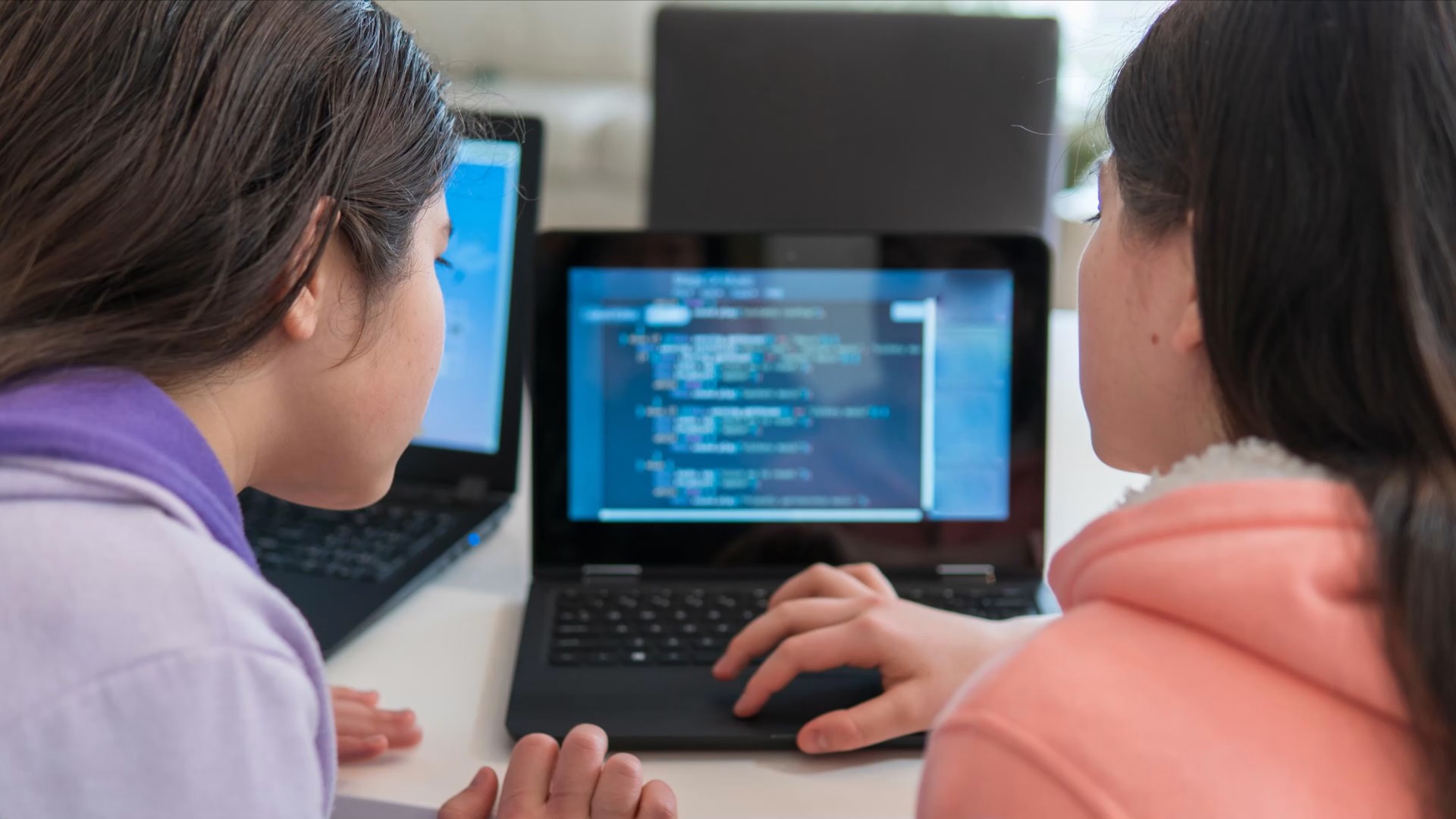
How we work with AI in IGNITE's extracurricular activities
At IGNITE Serious Play, we've been bringing creative technology to schools in Barcelona and Madrid for over a decade. Artificial intelligence is part of our curriculum. robotics y programming through creative AI projects linked to real challenges and the Sustainable Development Goals.
- Project-based learning ’s relationship with the IGNITE Method's guarantee of success.gamification and progressive difficulty.
- Sessions entirely in English, adapted to each stage.
- Instructors with technical training in engineering, programming, or design.
- At school or online, with Programming itineraries for children aged 7 to 14.
Frequently Asked Questions about AI After-School Activities for Children
What does a child learn in an after-school artificial intelligence program?
Learn how a machine learns from data, how to train simple models that recognize images, sounds, or gestures, and how to use them in robots, games, or apps. It also develops critical thinking skills: why AI makes mistakes, what biases are, and how to verify its answers.
From what age can one learn artificial intelligence?
From the age of 6 or 7, children can learn through hands-on games and robots that teach the concept of learning by example. By 8 or 9, they can train their own models with visual tools, and from 12 onwards, they can design AI solutions and begin learning Python.
Can children use ChatGPT?
Not before the age of 13: OpenAI's terms of use require this minimum age and parental permission until the age of 18. For children under 14, an extracurricular AI activity must work with tools without registration or with educational accounts managed by the school.
Do you need to know how to program to sign up for an AI after-school activity?
No. Programs for elementary school use visual tools that don't require programming. If the child has already done robotics or block-based programming, they will progress faster, because computational thinking is the foundation for understanding AI.
Is an AI after-school activity better than one focused on robotics and programming?
There's no need to choose: the best ones combine them. Robotics and programming give AI something to control and a real problem to solve, and AI makes robotics projects more ambitious.
Will learning AI make my child think less?
On the contrary, if the approach is correct, the risk of thinking less arises when AI is used to perform tasks without understanding it. An extracurricular activity that teaches how to train AI, detect its errors, and verify it reinforces critical thinking.
Are there online extracurricular activities in artificial intelligence?
Yes. Many AI projects can be done from home with a computer and a camera. IGNITE offers online programs for children aged 7 to 14, in addition to in-person extracurricular activities in schools in Barcelona and Madrid.
What does a school need to offer an AI extracurricular activity?
Very little: a classroom with computers, an afternoon time slot, and a contact person from the school administration or the PTA. With IGNITE, the program is viable with as few as 8 or 10 students, and the company provides the materials, instruction, and support for families.
Conclusion: understand AI, don't just consume it
AI is already part of children's lives; the difference lies in whether they understand it or simply consume it. A good extracurricular AI program gives them what European frameworks require: the ability to create with it and to question it.


